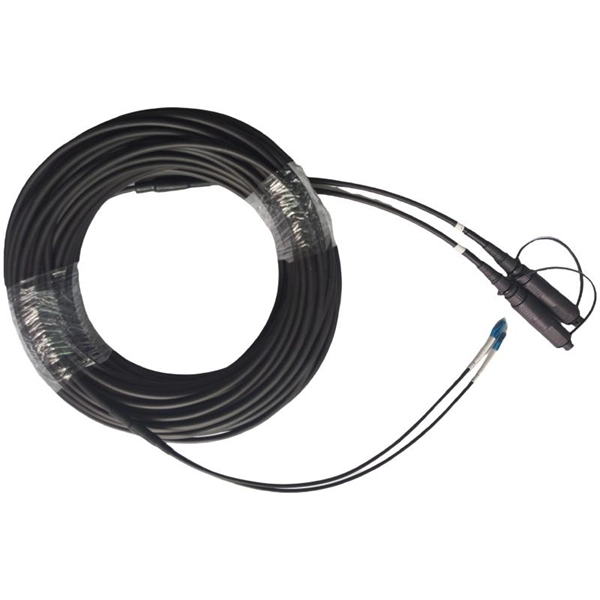
A complete optical communication setup includes transmitters, optical fibers, amplifiers, switches, splitters, circulators, and receivers to enable high-speed, long-distance data transmission.Core Components
1. Transmitters: Convert electrical signals into optical signals using lasers or LEDs. They are the starting point of any optical communication system, enabling data to be sent over fiber networks or free-space optical links . 2. Optical Fibers: Thin strands of glass or plastic that carry light signals over long distances with minimal loss. They can support technologies like wavelength-division multiplexing (WDM) and dense WDM (DWDM) for high-capacity data transmission . 3. Receivers: Photodetectors convert optical signals back into electrical signals at the receiving end, completing the communication loop . 4. Optical Amplifiers: Boost signal strength to maintain quality over long distances without converting back to electrical signals. Common types include erbium-doped fiber amplifiers (EDFAs) and Raman amplifiers . 5. Optical Switches and Circulators: Manage the routing of optical signals within networks, enabling dynamic reconfiguration and efficient traffic management . 6. Optical Splitters: Divide a single optical signal into multiple paths for distribution in passive optical networks (PONs) or metro networks . 7. Optical Transceivers: Pluggable modules that integrate transmitter and receiver functions, supporting high-speed connections such as 400G, 800G, and beyond. Vendors like Cisco provide QSFP-DD, OSFP, and QSFP112 modules for data centers and AI workloads .
Additional Equipment and Considerations
- Passive Components: Connectors, patch panels, and couplers for network assembly and maintenance .
- Monitoring and Testing Tools: WaveShaper and WaveAnalyzer systems for precise wavelength control, signal quality monitoring, and performance optimization .
- Integration with Data Centers: High-density optics, coherent pluggable modules, and silicon photonics enable scalable, low-latency connections for AI, cloud, and enterprise networks .
- Network Management Software: Provides end-to-end visibility, fault detection, and optimization for optical networks .
Applications
Optical communication equipment is used in telecom networks, data centers, 5G infrastructure, cloud services, and enterprise networks. It supports high-speed, long-distance data transmission, reduces latency, and enables efficient bandwidth utilization .
Summary
A complete optical communication system combines transmitters, fibers, amplifiers, switches, splitters, circulators, receivers, and transceivers, along with passive components and monitoring tools, to deliver reliable, high-speed data transmission across modern networks. Proper selection and integration of these components ensure optimal performance for applications ranging from AI data centers to global telecom backbones .